Cooking Line
Degreasing may include accessible exteriors and surrounding surfaces at ranges, griddles, ovens, fryers, salamanders, and hot-holding equipment. Units must be shut down and cool enough to clean safely.
Serving Reno, Nevada & surrounding areas
Open 24/7
Kitchen cleaning in Reno
Detailed cleaning for cooking equipment, food preparation areas, floors, walls, and exhaust components, scheduled around your operating hours.
Planned deep cleaning
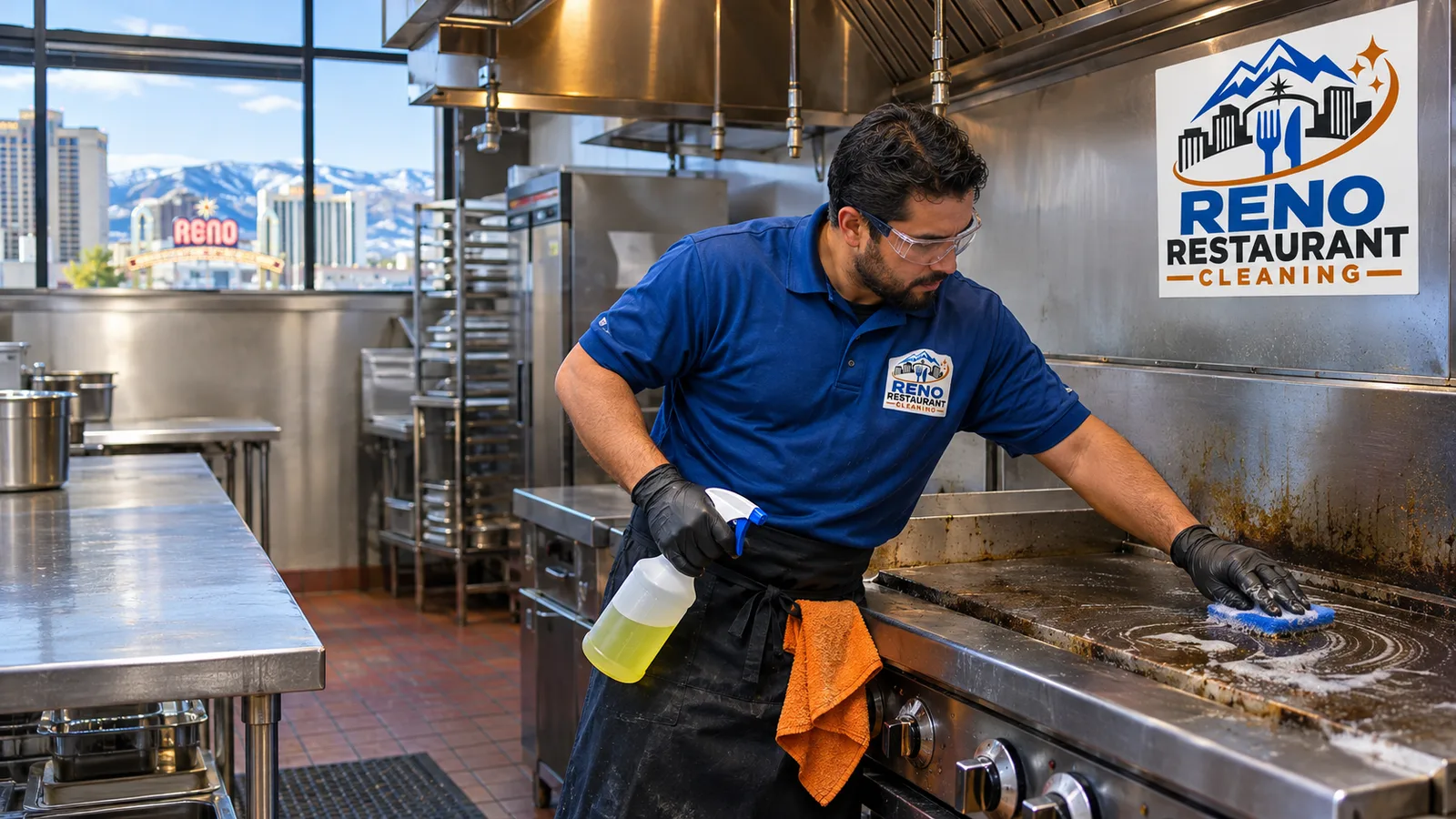
Grease, carbon deposits, food residue, and tracked-in soil collect quickly in a working kitchen. Commercial Kitchen Cleaning Services address the areas that routine closing work may not fully reach, including equipment sides, floors beneath movable units, wall surfaces, shelving, and other high-use zones.
Reno Restaurant Cleaning provides planned deep cleaning for restaurants and other commercial food operations. As a professional restaurant company in Reno, we build the work around the kitchen layout, equipment, operating schedule, and current condition. The goal is a practical written scope that identifies what will be cleaned, how access will be handled, and which tasks require separate scheduling.
Reno's dry climate can bring fine dust through receiving doors and ventilation openings. When that dust mixes with airborne cooking grease, it forms a film on ledges, equipment tops, and nearby surfaces. Kitchens near the Downtown Reno entertainment district may also have late service hours and limited shutdown windows, while operations around the University of Nevada, Reno can experience demand tied to the academic calendar. Scheduling and access plans should account for those conditions rather than interrupting meal preparation.
Cleaning scope
A commercial kitchen deep cleaning plan starts with the surfaces and equipment included in the agreed scope. Typical work may cover stainless steel preparation tables, shelving, sinks, backsplashes, cooking-line exteriors, fryer surrounds, floor edges, drains, doors, washable walls, and accessible areas beneath or behind equipment.
Kitchen equipment cleaning must follow the manufacturer's care instructions. Stainless steel is cleaned with the grain, electrical controls are protected from direct moisture, and chemicals are selected for the soil and surface. Heavy carbon on a range is different from grease film on a wall, so one product and one method should not be used everywhere.
Interior equipment cleaning can require shutdown, cooling, disassembly, or approval from the operator. Refrigeration coils, electrical parts, gas components, fire-suppression devices, and inaccessible ductwork may need qualified specialty attention. Those exclusions should be clear before work begins. Food-contact surfaces also need the correct wash, rinse, and sanitizing sequence after soil has been removed.
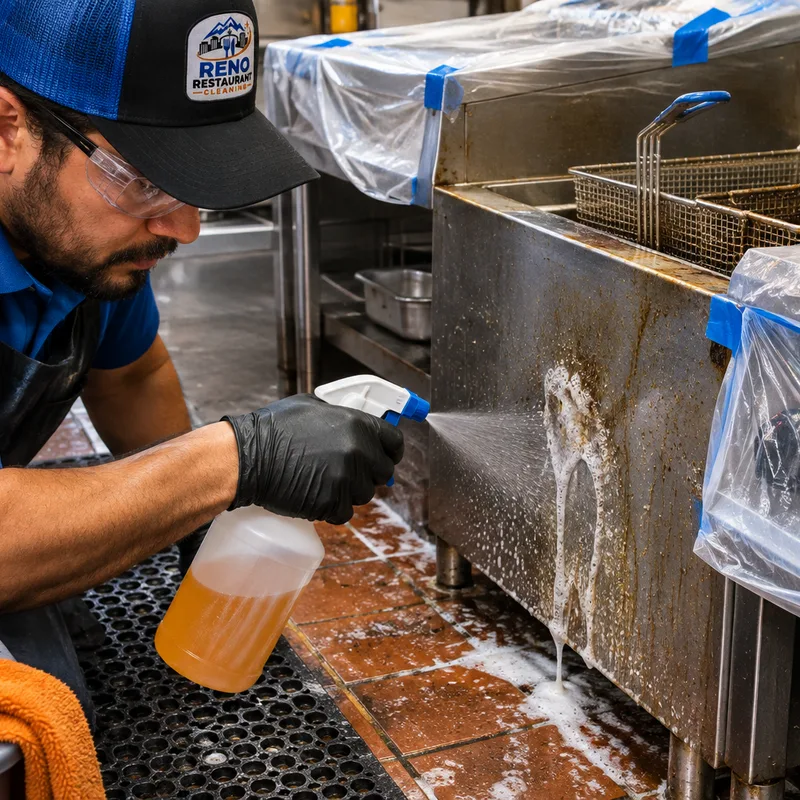
Degreasing may include accessible exteriors and surrounding surfaces at ranges, griddles, ovens, fryers, salamanders, and hot-holding equipment. Units must be shut down and cool enough to clean safely.
Work can cover tables, shelving, sink surrounds, backsplashes, doors, and other washable surfaces after ingredients, utensils, and loose supplies have been removed or secured.
Scrubbing targets grease film, impacted soil, corners, floor-to-wall junctions, and accessible areas beneath movable equipment. Drain treatment depends on access and the agreed scope.
Washable walls, ledges, equipment tops, and accessible overhead surfaces can collect greasy dust. Cleaning methods are adjusted around ceiling materials, lights, and electrical fixtures.
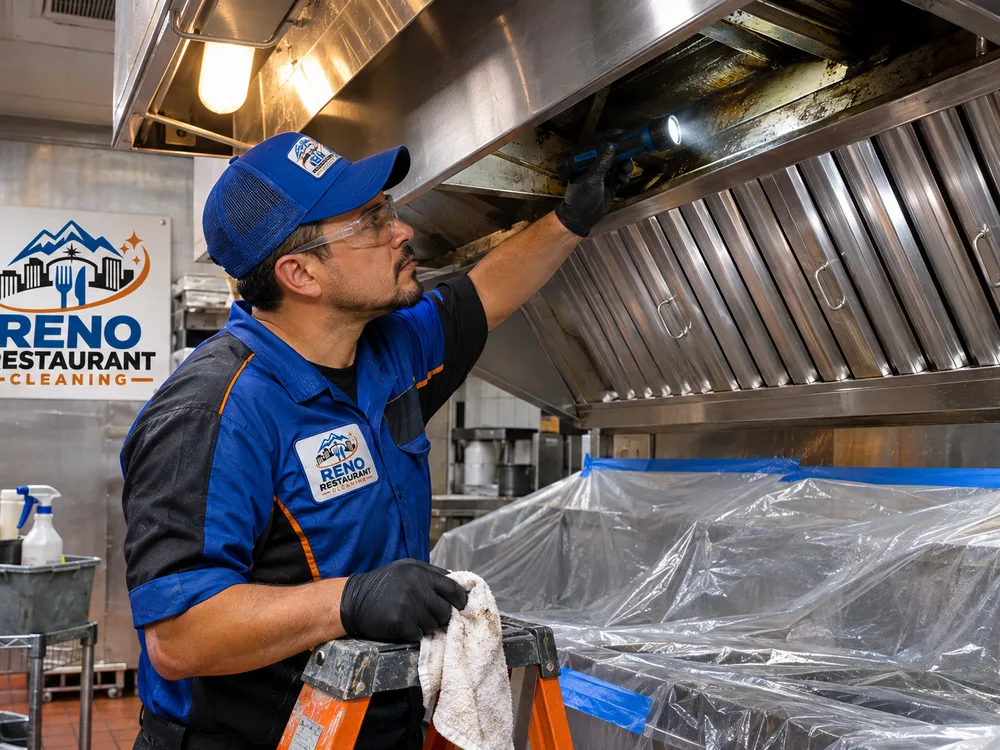
Visible hood surfaces and removable filters may be cleaned as specified. Full exhaust-system work requires access to the plenum, fan, and duct path and should be documented separately.
Handles, casters, kick plates, thresholds, and other touchpoints receive attention before approved movable items are returned to position and the work area is reviewed.
Exhaust cleaning scope
Restaurant hood cleaning requires a precise scope. Wiping the visible canopy or washing removable baffle filters is not the same as cleaning the complete kitchen exhaust system. A full system may include the hood interior, plenum, ductwork, access panels, and rooftop exhaust fan. Grease must be removed throughout the accessible path, with electrical and fire-suppression components protected during work.
Before scheduling, confirm whether the requested service is surface cleaning, filter cleaning, or complete exhaust-system cleaning. The cleaner should also identify roof access, fan condition, access-panel locations, water control, and cleanup responsibilities. Requirements for commercial cooking exhaust systems are commonly tied to NFPA 96, while inspection or service frequency depends on cooking volume, fuel, and the authority having jurisdiction.
Nevada winters can bring freezing conditions to the Reno area. Rooftop access and wash-water control therefore need advance planning, especially when exhaust fans are reached by exterior ladders or across exposed roof surfaces. Weather can affect timing even when interior kitchen cleaning proceeds as planned.
The cleaning process
We review the cooking line, preparation areas, floors, access points, utility concerns, equipment mobility, and current grease or carbon buildup. Photos and notes help define the work.
The proposal identifies included surfaces, equipment, exclusions, preparation duties, expected shutdown needs, and whether hood or exhaust work is part of the project.
Cleaning is arranged around service, deliveries, cooling time, and reopening. The operator secures food and smallwares, while the cleaning plan addresses chemical control and safe movement through the work area.
Crews generally work from higher surfaces toward lower ones and from drier tasks toward wet work. Degreasing, agitation, rinsing, extraction, and floor cleaning are matched to the surface.
The completed areas are checked against the written scope. Any inaccessible item, maintenance concern, damaged surface, or task requiring another trade is documented for the operator.
Choosing a provider
A useful estimate should describe the work rather than rely only on kitchen square footage. Ask which equipment faces and interiors are included, whether units will be moved, who disconnects utilities, how food-contact surfaces are handled, and what happens if heavy carbon or inaccessible grease is discovered. For hood work, ask whether the scope covers only visible surfaces or the full exhaust path.
A compact kitchen in Midtown may require hand detailing or partial equipment movement. Downtown operations may need cleaning after late-night service, while airport-area restaurants may prioritize firm completion windows.
Recurring Kitchen Cleaning Services can be divided into nightly staff tasks, periodic professional kitchen cleaning, and specialty exhaust work. The right frequency depends on menu, cooking volume, grease production, staffing, equipment arrangement, and inspection findings. A high-output fryer line and a light-preparation kitchen should not receive identical schedules.
Provide the kitchen layout, operating hours, equipment list, and problem areas to receive a written scope built around the work your facility actually needs.
Call to ScheduleCommon questions
Pricing depends on labor time, grease buildup, equipment count, access, and whether the work includes a hood or full exhaust system. A small preparation area needing surface cleaning costs less than a heavily used cooking line that requires equipment movement and carbon removal. Reno estimates should state the included areas, preparation requirements, and exclusions after an inspection or detailed review.
Yes, cleaning can often be scheduled after closing or during another planned shutdown window. The kitchen needs enough time for hot equipment to cool, cleaning to be completed, surfaces to dry, and the area to be reset before food preparation resumes. Late-night operations in Downtown Reno may need a different schedule than breakfast-focused kitchens.
Equipment interiors are included only when they are specifically listed in the scope and can be accessed safely. Some units require cooling, disassembly, utility isolation, or manufacturer-approved procedures. Electrical cabinets, gas controls, motors, refrigeration components, and fire-suppression equipment may require a qualified technician rather than a general cleaning crew.
No, visible hood cleaning is not the same as cleaning the complete exhaust system. Full restaurant hood cleaning can involve the canopy, filters, plenum, ductwork, access panels, rooftop fan, and containment of grease and wash water. The proposal should identify each component included and address roof access and weather conditions in Reno.
The schedule should be based on the menu, cooking volume, grease production, equipment layout, and results of routine inspections. Staff may handle daily food-contact surfaces and spills, while professional deep cleaning addresses accumulated soil in less accessible areas. Exhaust-system inspection and cleaning frequency should follow applicable requirements and the authority having jurisdiction.
Food, utensils, small appliances, and loose supplies should be removed or secured as agreed in the preparation plan. Equipment scheduled for cleaning must be shut down and cooled, and the crew needs access to designated water, power, waste, and parking areas. Any alarm, roof, key, or delivery restrictions at the Reno property should be shared before arrival.
Cleaning removes soil, grease, and residue, but it cannot reverse permanent staining, corrosion, etched metal, failed coatings, damaged grout, or heat discoloration. An inspection can distinguish removable buildup from surface damage. Testing a small area is often appropriate when the material or finish is uncertain.
Tell Reno Restaurant Cleaning about your cooking line, preparation areas, hood scope, and available shutdown window. We will help define the work and establish a practical cleaning plan before service begins.