Cooking-Line Exteriors
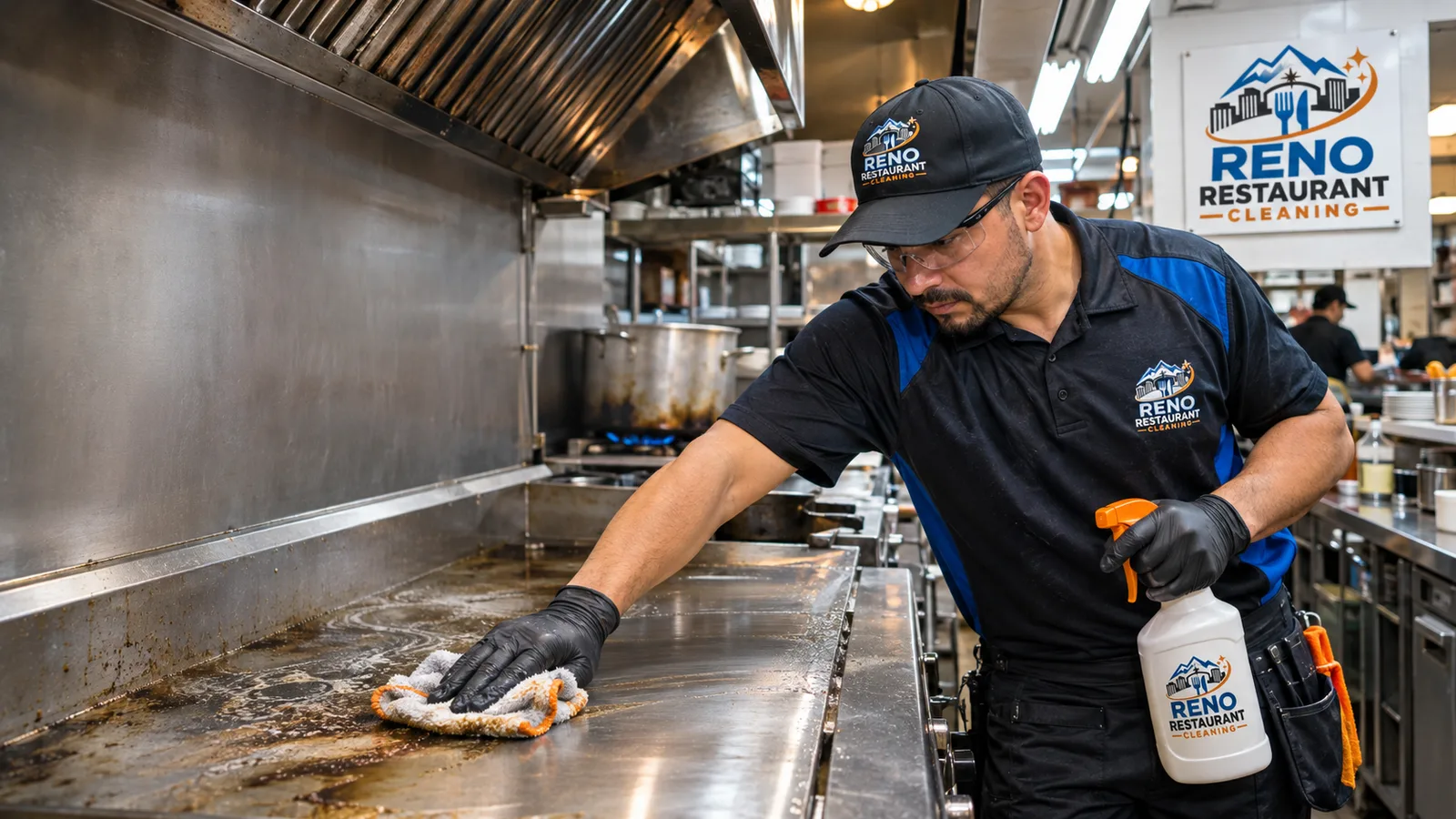
Accessible exteriors, control surrounds, splash zones and adjacent walls are cleaned with methods suited to the surface and soil. Equipment is moved only when it is safe, permitted and included in the scope.
Serving Reno, Nevada & surrounding areas
Open 24/7
Kitchen cleaning in Sun Valley
Remove grease, food residue and overhead dust with a cleaning plan built around your equipment, operating schedule and kitchen conditions.
Planned kitchen care
Restaurant Kitchen Cleaning Sun Valley businesses can rely on starts with a clear scope. Reno Restaurant Cleaning assesses the cooking line, floors, walls, prep areas and hard-to-reach surfaces, then plans the work around operating hours and access restrictions. The goal is to address the buildup that ordinary closing routines may leave behind without disrupting food service.
Before the crew begins, Reno's local restaurant service works with managers to identify priority areas, protect sensitive equipment and define what will be cleaned. Our office at 517 Evans Ave, Suite 4 in Reno provides a practical base for serving nearby Sun Valley. Regional dust and dry conditions can leave fine material on beams, pipes and other overhead surfaces, while daily cooking adds airborne grease near the line. Both types of buildup need the right tools and methods.
Cleaning scope
A commercial kitchen contains different soils on different surfaces. Degreaser may be appropriate for washable, grease-coated areas, while food-contact surfaces need compatible products, careful rinsing and sanitizing according to the product label and the restaurant's procedures. Stainless steel should be cleaned with the grain to reduce visible scratching. Floors may need agitation along edges, beneath movable equipment and around floor drains where residue collects.
A written scope can include accessible equipment exteriors, backsplashes, walls, washable ceiling surfaces, shelving, prep-area surfaces, floor edges and spaces beneath movable units. Heavy deposits may require dwell time so the cleaning product can loosen the soil before agitation and removal. Electrical controls, pilot assemblies and sensitive components must be protected rather than sprayed directly.
Kitchen cleaning does not replace professional exhaust-system service. Grease inside hood plenums, filters, ducts and rooftop exhaust fans is specialized work and should be handled under the restaurant's applicable fire-safety and maintenance requirements. We separate those boundaries clearly when reviewing the job.
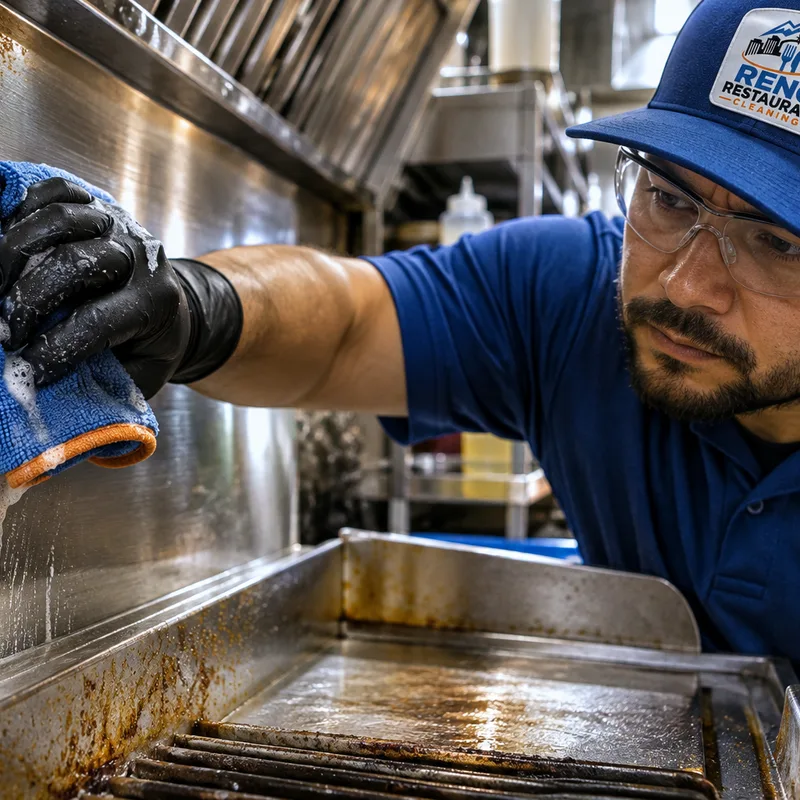
Accessible exteriors, control surrounds, splash zones and adjacent walls are cleaned with methods suited to the surface and soil. Equipment is moved only when it is safe, permitted and included in the scope.
Cleaning can address traffic lanes, corners, base edges, areas around equipment legs and accessible spaces near floor drains. Slip concerns and drainage limitations are reviewed before wet work starts.
Shelving, washable surfaces and accessible prep-area fixtures can be included. Food, utensils and loose supplies should be removed or protected before cleaning begins.
Grease film and residue are treated according to surface type. Painted finishes, acoustic materials and damaged coatings may limit how aggressively an area can be cleaned.
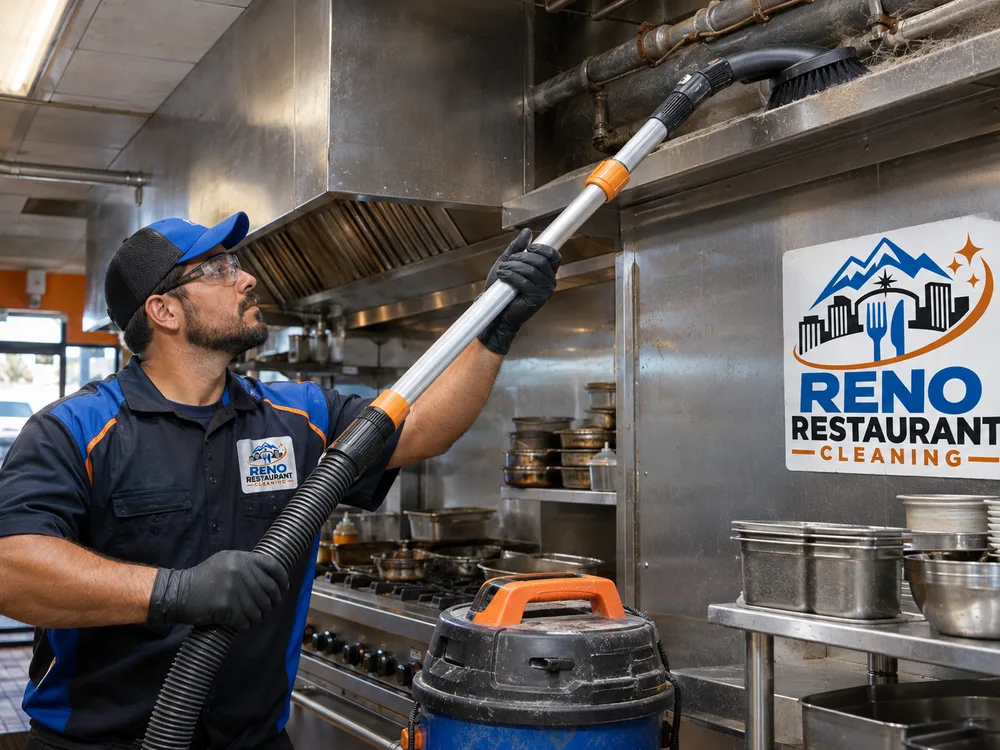
Beams, ledges, pipes, vents and other reachable overhead surfaces are dusted with extension tools or controlled-access equipment. Loose material is captured rather than brushed onto clean work areas.
One-time resets and recurring visits are available as scope options. Frequency depends on cooking volume, menu, equipment layout and how quickly grease or dust returns.
Overhead cleaning
Restaurant High Dusting Sun Valley kitchens need is different from ordinary floor-level dusting. Overhead pipes, conduit, beams, tops of coolers, light housings and horizontal ledges can collect dust mixed with grease. That combination may cling to surfaces and cannot always be removed effectively with a dry duster alone.
The crew first reviews access, equipment placement and what lies beneath each work area. Food, clean utensils and prep surfaces are covered or cleared. Depending on the surface, technicians may use microfiber tools, HEPA-filtered vacuum attachments or damp wiping with a compatible cleaner. Work proceeds in controlled zones so falling debris does not spread across the kitchen.
Access is a major part of the plan. Extension poles may reach some surfaces, while ladders or other suitable equipment may be needed for others. Work near energized fixtures, fire-suppression components or fragile ceiling materials requires added care. High dusting improves the overall cleaning result, but it does not include modifying electrical, suppression or ventilation systems.
The cleaning process
We discuss operating hours, cooking equipment, priority areas, access and any surfaces that need special handling. Photos or an on-site walkthrough may be used to develop an accurate scope.
The work plan states which areas are included, what the restaurant must clear beforehand and when cleaning can begin. Overnight, closed-day or off-peak scheduling may be considered based on availability.
Loose items are removed or covered, sensitive controls are protected and the crew establishes controlled work zones. Cleaning normally starts overhead and moves toward lower surfaces and floors.
Technicians match products, dwell time and agitation to the material and level of buildup. Grease, food residue and dust are collected without treating every surface the same way.
The cleaned areas are reviewed against the agreed scope. Any access limitation, damaged finish or area requiring a specialized contractor is documented for the manager.
Sun Valley operations
Sun Valley sits immediately north of Reno, so restaurant operators may draw employees, vendors and customers across both communities. That makes scheduling important. Cleaning should fit receiving windows, food preparation and opening times rather than force the kitchen into an unrealistic turnaround.
The building and equipment layout matter more than a generic checklist. A compact line with fixed equipment presents different access issues than an open prep kitchen with movable tables. Older finishes may also need gentler treatment, especially when coatings are worn or grout is already damaged. During the walkthrough, we identify what can be cleaned safely, what must be moved by restaurant staff and which areas require another qualified trade.
Recurring service can focus on buildup-prone zones instead of repeating the same work at every visit. For example, overhead ledges may be placed on one interval while floors and line exteriors receive more frequent attention. The right schedule depends on frying volume, airborne grease, dust entry, staffing and the restaurant's own closing routine.
A walkthrough turns a broad cleaning request into a written scope with clear exclusions, preparation requirements and scheduling options.
Call to ScheduleCommon questions
Pricing is based on labor, kitchen size, buildup, access, equipment layout and the exact surfaces included. Heavy grease, restricted spaces beneath fixed equipment and overhead work generally require more time than routine cleaning. Photos can help with initial planning, but a walkthrough is the best way to confirm the scope and price.
After-hours scheduling may be available when arranged in advance. The workable window must account for shutdown procedures, surface dwell time, cleaning, drying and the restaurant's next preparation period. Sun Valley operators should provide expected closing and reopening times when requesting a scope.
A visit may take several hours or require a longer closed period, depending on the kitchen's size and condition. High dusting, heavy grease, tightly spaced equipment and extensive floor work add time. The expected duration is set after access and cleaning priorities are reviewed.
Kitchen surface cleaning does not include internal hood ducts or rooftop exhaust fans unless that specialized work is expressly identified and handled by an appropriately qualified provider. Accessible exterior hood surfaces may be included in the written scope. Internal exhaust-system cleaning follows separate fire-safety and documentation requirements.
Staff should remove exposed food, clean utensils, portable appliances and loose supplies from the work zones. Equipment should be shut down and cooled when the agreed work requires it, following manufacturer and restaurant procedures. The preparation list will also state which items should be moved or left in place.
Deep cleaning and high dusting should usually be separated from active food preparation. Airborne debris, wet floors and cleaning products can interfere with safe kitchen operations. Limited work in isolated areas may be possible, but only when food and clean items are protected and the manager approves the work zone.
The interval should be based on visible buildup, cooking volume, ventilation, ceiling layout and how much dust enters the building. A kitchen that produces substantial airborne grease may need overhead surfaces checked more often because dust adheres to the film. An initial cleaning provides a useful baseline for setting a recurring schedule.
Tell Reno Restaurant Cleaning about the kitchen, the problem areas and your available service window. We will help define a practical scope for grease removal, detailed surface cleaning and high dusting.