
Cooking-Line Buildup
Degreasing targets oily film near fryers, ranges, prep stations, and other areas where aerosolized cooking fats settle onto the floor.
Serving Reno, Nevada & surrounding areas
Open 24/7
Floor cleaning in Reno
Remove grease, food residue, and embedded soil from tile and grout with a cleaning plan built around your kitchen's surfaces, equipment, and operating schedule.
Beyond routine mopping
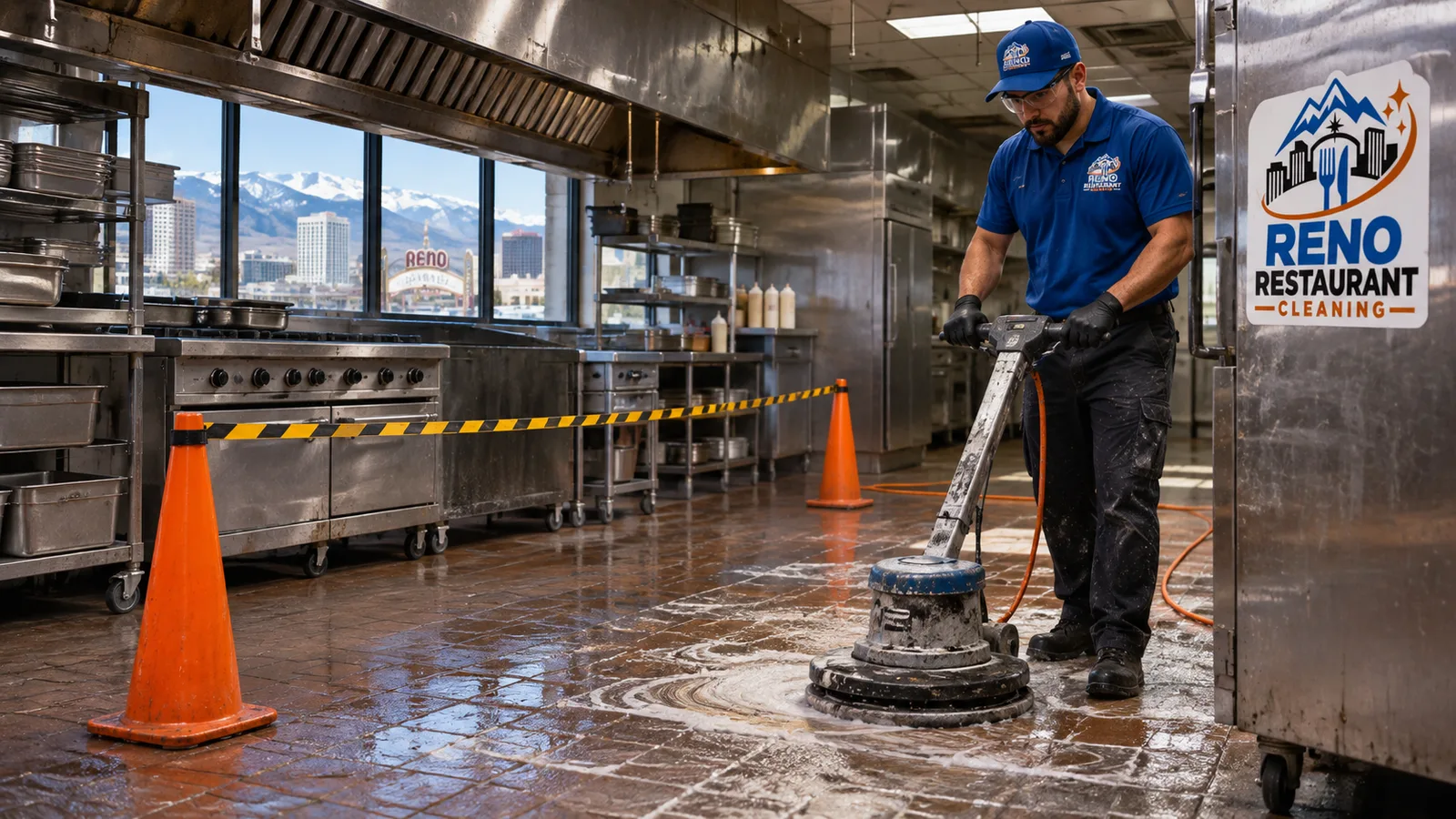
Commercial Kitchen Floor Cleaning addresses the film and compacted residue that routine mopping can leave on tile, grout lines, edges, and hard-to-reach areas. Cooking oil can spread through foot traffic, settle around equipment, and attract more soil. Using too much detergent may make matters worse because residue left behind can create a tacky surface.
Reno Restaurant Cleaning provides scheduled and one-time restaurant floor cleaning services based on the floor material, buildup, drainage, and access. The goal is a cleaner surface without flooding the kitchen or applying harsh chemistry without regard for the substrate. For each project, an experienced restaurant team in Reno, NV plans the work around food preparation areas, customer service hours, and the time the floor needs to dry before normal traffic resumes.
Our location at 517 Evans Ave, Suite 4 places the crew near downtown dining businesses and the university area. We also plan service for operators near Midtown, where compact restaurant footprints can make equipment access and wastewater control especially important, and along South Virginia Street, where larger kitchens may require cleaning in stages.
Tile and grout care
Tile and grout do not respond as one uniform surface. Ceramic and quarry tile are common in commercial kitchens because they tolerate demanding use, but their grout joints and textured faces can hold grease. Cracked grout, missing joints, loose tiles, and failed transitions also need to be identified before wet cleaning begins.
Restaurant tile cleaning starts with dry soil removal and inspection. A compatible alkaline degreaser is then given appropriate dwell time so it can loosen oily residue before mechanical agitation. Brushes or floor machines are selected for the tile texture and the amount of open space. Edges, corners, toe kicks, and paths beside cooking equipment receive separate attention because a large machine cannot reach them effectively.
Restaurant grout cleaning requires controlled agitation within the joints rather than a quick pass over the tile face. The loosened soil and cleaning solution must then be recovered or directed to an approved sanitary drain as conditions allow. Final rinsing matters because cleaner residue can attract soil and leave the floor feeling sticky. Cleaning can improve discolored grout, but it cannot replace missing grout or repair damaged tile.
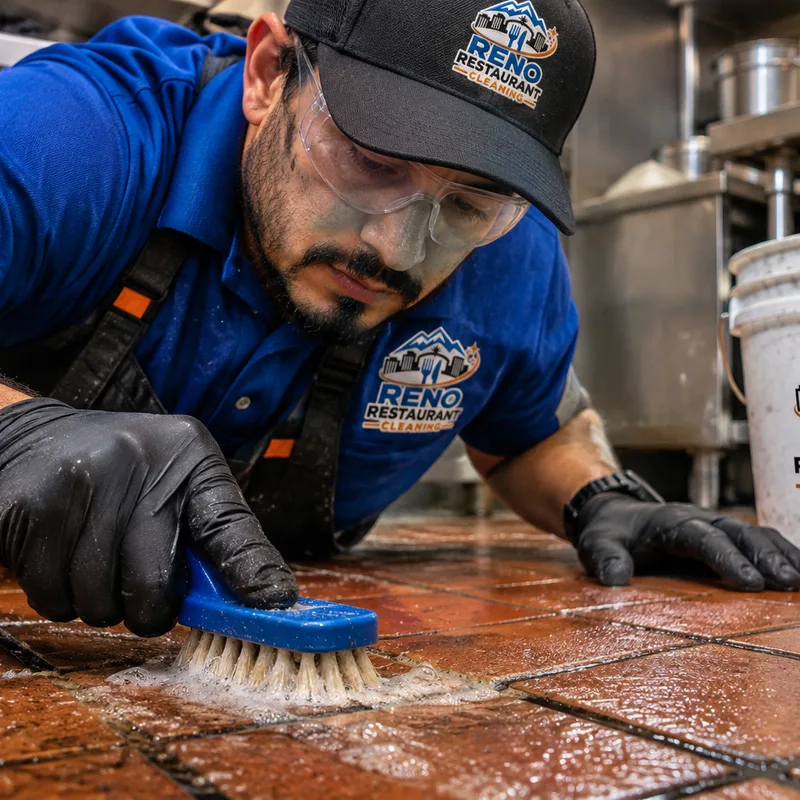
Degreasing targets oily film near fryers, ranges, prep stations, and other areas where aerosolized cooking fats settle onto the floor.
Mechanical agitation works cleaning solution into textured tile and recessed grout joints where flat mops have limited contact.
Detailed brushing addresses wall edges, corners, toe kicks, and accessible areas around movable equipment.
Soil and spent solution are removed rather than redistributed. Controlled recovery also limits standing water during the work.
Heavy patches receive additional dwell time or agitation when the floor material can safely tolerate it.
A scheduled plan can focus on high-load zones more often while rotating lower-load areas through periodic deep cleaning.
The cleaning process
We identify the flooring material, coating condition, damaged joints, drainage points, equipment access, and the heaviest grease deposits. The scope also accounts for occupied areas and the kitchen's operating schedule.
Loose debris is removed, movable items are cleared as agreed, and sensitive surfaces are protected. Wet-floor controls help keep staff away from active cleaning zones.
A compatible cleaner is mixed for the soil load and applied evenly. Adequate dwell time allows the chemistry to break the bond between greasy residue and the floor.
Mechanical equipment handles suitable open areas while hand tools address grout joints, corners, edges, and restricted spaces. Extra passes are used where buildup remains.
The spent solution is recovered or managed through an appropriate sanitary drainage route. We rinse away remaining cleaner, review the floor, and allow for safe drying before the area returns to use.
Local service planning
A useful service plan reflects how the kitchen actually runs. Downtown and Midtown restaurants may have narrow service corridors, limited storage, or small back-of-house spaces, so cleaning often works best in controlled zones. Kitchens serving the University of Nevada, Reno area may experience sharp changes in traffic around events and academic schedules. Larger properties near the Reno-Sparks Convention Center can have multiple food-service areas that need separate access and timing plans.
Reno's high-desert climate also affects exterior soil. Dry conditions can bring fine dust through receiving doors and employee entrances, where it combines with grease to form stubborn tracked-in residue. Winter moisture and deicing material may add another layer near entrances and loading areas. These soils should be removed before wet degreasing so they are not turned into slurry and spread through the kitchen.
Scheduling may be after closing, before food preparation begins, or during a planned shutdown. The right window depends on the area, noise limits, equipment movement, ventilation, and drying time. We define those details before work starts so managers can coordinate staffing and access.

Service frequency
The right frequency depends on cooking volume, menu, floor texture, foot traffic, ventilation, and daily maintenance. A high-output fryer line may need targeted restaurant floor degreasing more often than a storage corridor. A kitchen with recessed grout joints or textured quarry tile may also hold soil faster than a smooth, well-maintained surface.
A one-time deep clean suits built-up residue, inspection preparation, an operational reset, or the end of a busy period. Recurring service helps prevent grease from becoming a thick, difficult layer and can rotate lower-load areas while prioritizing heavily used zones.
Daily staff practices still matter between professional visits. Use correctly diluted cleaner, change dirty mop water, remove loose food debris first, and clean spills promptly. Avoid mixing chemicals, especially chlorine bleach with acids or ammonia. Safety Data Sheets and product labels provide handling and dilution instructions. Professional cleaning supplements routine sanitation; it does not replace it or repair damaged flooring.
Describe the floor material, problem areas, kitchen hours, and preferred service window to receive a practical cleaning scope for your operation.
Call to ScheduleCommon questions
Pricing is based on cleanable square footage, grease level, floor material, equipment access, drainage, and whether the work is one-time or recurring. Heavy buildup around fryers generally takes more chemistry, dwell time, and detailed agitation than routine maintenance. Restricted access in compact downtown or Midtown kitchens can also affect labor. A site review is the reliable way to establish a written scope and price.
Yes, off-hours cleaning can be scheduled when access, staffing, and drying time permit. The service window must allow time to prepare the area, degrease, agitate, recover solution, rinse, and let the floor dry before employees return. Reno businesses with late service hours may benefit from phased cleaning rather than closing the entire kitchen floor at once.
The correct frequency depends on grease production, traffic, floor texture, and daily cleaning quality. Fryer and cooking-line zones often need more frequent attention than dry storage or low-traffic areas. An initial cleaning shows how quickly residue returns, which helps establish a practical recurring schedule.
Grout cleaning can remove embedded grease and soil, but it cannot guarantee the original color. Permanent staining, worn grout, previous coatings, and chemical damage can limit the result. Missing or cracked joints require repair rather than additional cleaning, and those conditions should be documented before service.
Movable equipment can be addressed when relocation is safe and included in the agreed scope. Gas-connected, hardwired, plumbed, or fixed equipment generally requires authorized handling and should not be shifted casually. During the site review, the crew identifies what restaurant staff must clear and which areas will be cleaned around.
No, chemical selection must match the flooring and soil. Quarry tile, ceramic tile, grout, resilient flooring, coated concrete, and epoxy systems can have different limits. A test area may be appropriate when the material or prior coating is uncertain. Product labels, dilution requirements, and contact times guide the cleaning method.
Staff can return after the floor has been rinsed, recovered, and dried enough for safe traffic. Drying time varies with floor texture, room airflow, temperature, drainage, and the amount of water used. The service window should include this drying period rather than ending as soon as the equipment is packed.
Tell Reno Restaurant Cleaning about your tile, grout, grease buildup, access constraints, and operating hours. We will help define a suitable one-time or recurring floor-cleaning plan.