Cook-Line Surfaces
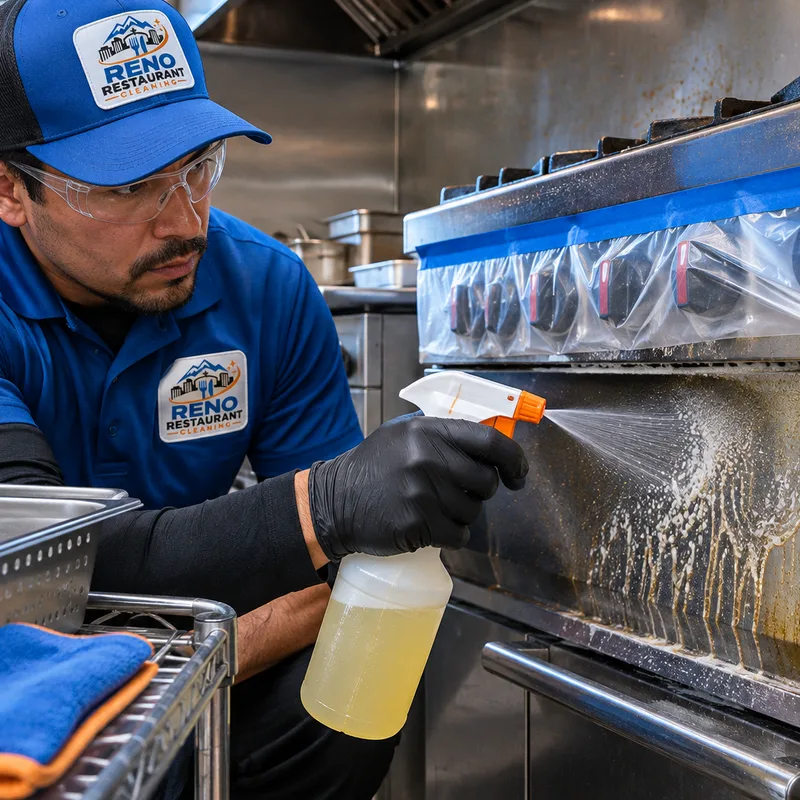
Degreasing focuses on accessible equipment exteriors, control surrounds, ledges, backsplashes, and the exposed areas around the line. Equipment is treated according to its finish and manufacturer restrictions.
Serving Reno, Nevada & surrounding areas
Open 24/7
Kitchen deep cleaning in Fernley
Remove stubborn grease and food residue with a practical cleaning plan built around your equipment, floors, operating hours, and problem areas.
Planned deep cleaning
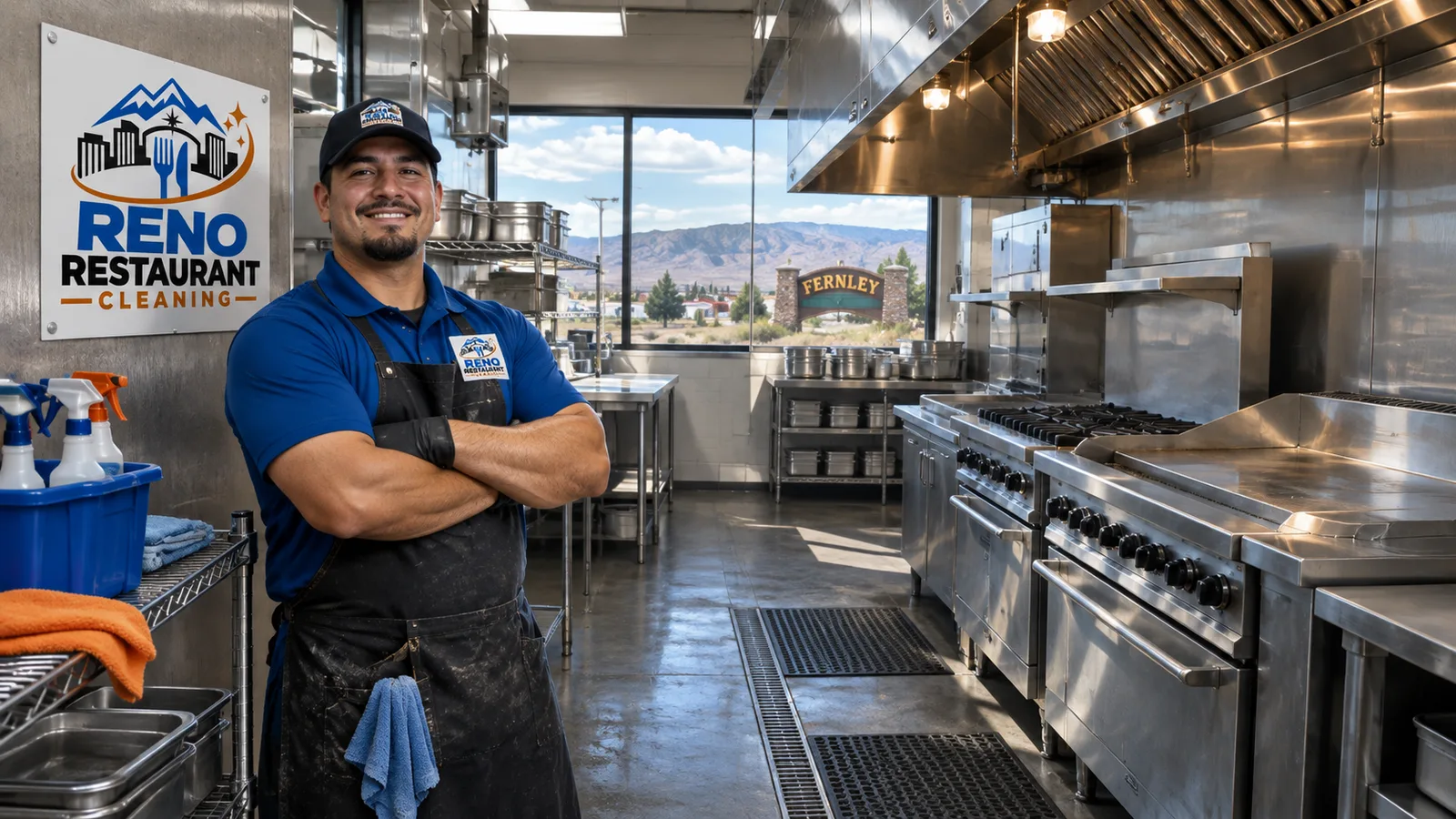
Restaurant Kitchen Deep Cleaning Fernley addresses the grease, crumbs, spills, and residue that routine closing work may leave behind. Reno Restaurant Cleaning develops a written scope around the kitchen's actual condition, including the cook line, equipment exteriors, floor edges, baseboards, wall splash areas, and other accessible surfaces. The work can be scheduled around service hours to reduce interference with food preparation.
Our crew separates deep-cleaning tasks by surface, soil type, and access. Degreasing a stainless steel exterior calls for a different product and technique than cleaning a quarry-tile floor or working around sealed grout. Dwell time, mechanical agitation, controlled rinsing, and soil removal all matter. For every job, Reno's restaurant specialists focus on repeatable methods and a clear scope rather than applying one cleaner to every surface.
Fernley restaurants often serve customers arriving from Interstate 80, local workplaces, and nearby neighborhoods. A heavily used line or entry route can carry grease and tracked grit onto the floor faster than ordinary mopping removes it. Planned deep cleaning helps reset those areas before buildup becomes harder to lift.
Cleaning scope
Degreasing focuses on accessible equipment exteriors, control surrounds, ledges, backsplashes, and the exposed areas around the line. Equipment is treated according to its finish and manufacturer restrictions.
Where equipment can be moved safely and the scope permits it, the crew removes trapped food debris and greasy soil from concealed floor and wall areas. Gas, electrical, and fixed utility connections are not disturbed.
Splash zones, corners, floor edges, baseboards, and door surrounds collect residue that broad mopping misses. Detail work loosens buildup without flooding sensitive equipment or wall penetrations.
Restaurant Floor Cleaning Fernley may include degreasing, scrubbing, edge work, and soil extraction. The method is matched to quarry tile, concrete, resilient flooring, or another identified surface.
Accessible, empty shelving exteriors, worktable bases, cart frames, and floor areas can be added to the written scope. Food, utensils, and loose stock must be protected or removed before work starts.
The plan can concentrate on a neglected cook line, recurring slippery residue, a full kitchen reset, or selected back-of-house zones. The agreed scope identifies exclusions before the appointment.
Floor care
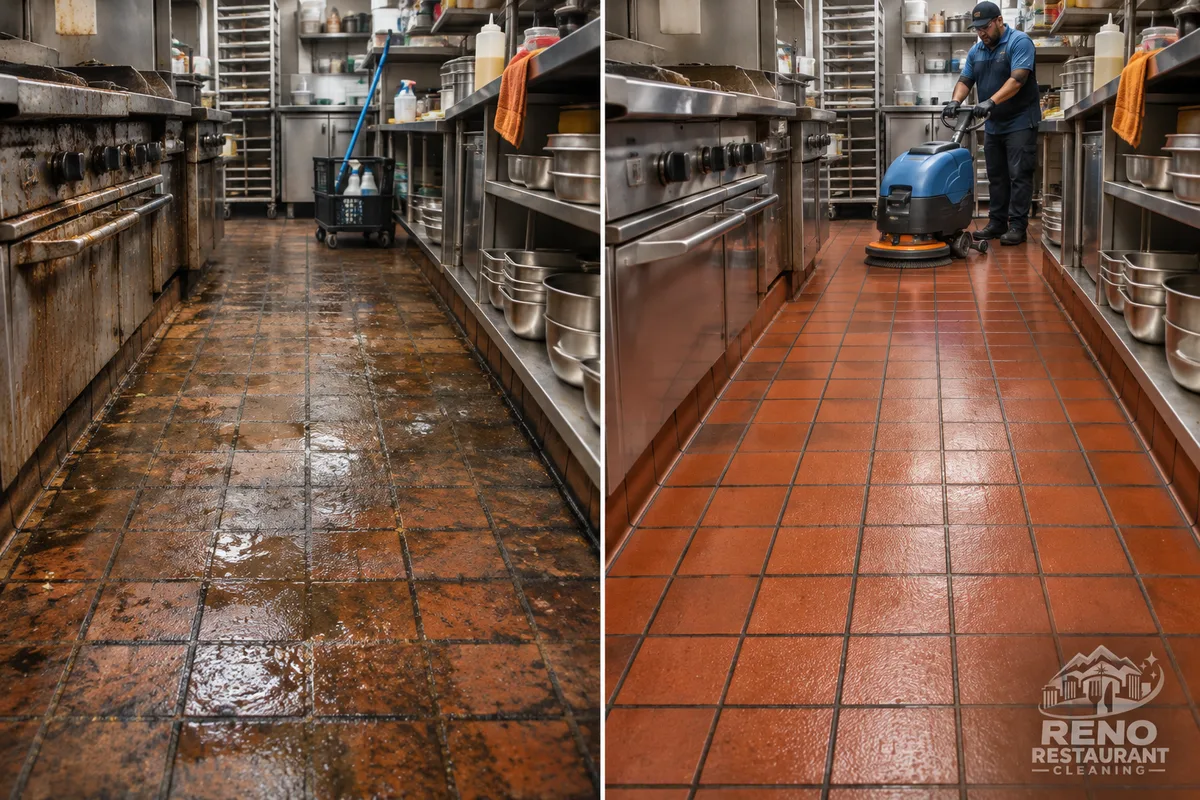
Grease can form a film across kitchen floors and settle into grout lines, textured tile, corners, and the space beneath equipment. Repeatedly mopping with dirty solution may spread that film rather than remove it. A deeper process starts with dry debris removal, followed by an appropriate degreaser, enough dwell time to loosen soil, mechanical agitation, and recovery of the suspended residue.
Surface identification comes first. Quarry tile and cementitious grout often tolerate firm agitation, while resilient flooring, coated concrete, and sealed surfaces may need different chemistry and brush pressure. Water is controlled around floor drains, thresholds, electrical connections, and equipment bases. A final rinse or neutralizing step may be used when the selected product requires it.
Fernley's dry, windy conditions can add tracked dust and fine grit near delivery and employee entrances. Once that material mixes with cooking oil, it creates dark buildup along traffic lanes and edges. Cleaning both the greasy film and embedded grit produces a more complete reset than treating either soil alone.
The cleaning process
The first step identifies floor materials, equipment that can be accessed, grease concentration, damaged surfaces, utility connections, drains, and operating constraints. Photos or an on-site assessment can help define the work.
You receive a practical description of included areas, exclusions, preparation needs, and timing. Work may be planned after closing, during a shutdown period, or in stages when the kitchen cannot be released all at once.
Food and food-contact items are removed or protected. The crew places caution markers, confirms access, selects products for the identified surfaces, and avoids unauthorized movement of connected equipment.
Loose debris is collected before cleaning chemistry is applied. Technicians allow suitable dwell time, agitate heavy soil, hand-detail tight areas, and recover residue instead of leaving loosened grease on adjacent surfaces.
The cleaned areas are checked under available lighting, with attention to floor edges, corners, equipment perimeters, and visible streaking or residue. Any access limitations or surface damage discovered during the work are documented.
Operational planning
A useful quote depends on more than square footage. A compact kitchen with years of cooked-on grease may require more labor than a larger kitchen receiving regular detail cleaning. Access also matters. Closely spaced equipment, fixed lines, low clearances, full storage racks, and limited drain access can slow the work.
Reno Restaurant Cleaning asks about operating hours, floor material, equipment layout, problem zones, and the last thorough cleaning. We also clarify who will remove food, smallwares, mats, and movable stock. Cleaning crews should not disconnect gas appliances, alter fire-suppression components, or open equipment for internal service unless that work is specifically assigned to an appropriately qualified provider.
Nevada food establishments are subject to applicable health requirements, but a deep clean is not a promise of inspection results or a substitute for daily sanitation. Restaurant management remains responsible for food-contact sanitation, employee practices, pest control, equipment maintenance, and other ongoing duties. Our work addresses the non-routine cleaning items named in the approved scope.
Choosing a plan
Start by identifying the outcome you need. A one-time reset may be appropriate before reopening, after equipment work, following a management change, or when buildup has outpaced routine closing tasks. Periodic deep cleaning can divide the kitchen into zones so high-soil areas receive attention before the entire facility reaches the same condition.
Ask what the quote includes. “Kitchen cleaning” can mean anything from floor scrubbing to detailed work around the entire cook line. The scope should identify equipment exteriors, wall areas, floors, grout, drains, movable equipment, waste handling, and any surfaces that will not be treated. It should also state whether the restaurant supplies hot water, drain access, or staff to move stock.
Product selection should follow the surface and soil. More aggressive chemistry is not automatically better. Strong alkalinity, excessive dwell time, or the wrong abrasive can dull aluminum, damage coatings, affect grout sealers, or mark finished surfaces. A careful plan uses the least aggressive effective method and tests uncertain finishes in a small area.
A written scope helps your team coordinate shutdown time, food protection, equipment access, and reopening tasks before cleaning begins.
Call to ScheduleCommon questions
Pricing depends on kitchen size, grease severity, included equipment exteriors, floor condition, access, and the time available for work. A lightly soiled floor-only job differs substantially from a detailed cook-line reset with edge work and cleaning beneath movable equipment. An assessment is the best way to produce a written price tied to defined areas.
After-hours scheduling may be available when access, staffing, and the required drying time can be coordinated. The plan should account for Fernley closing hours, alarm access, key control, ventilation, and the time needed to return equipment and floor mats before the next shift.
The duration is set by the scope, soil level, crew access, and whether the work is completed in one visit or staged by zone. A small floor treatment may fit within a closure window, while heavy cook-line buildup and concealed areas can require a longer shutdown. The estimated work window is confirmed after reviewing the kitchen.
Only equipment approved as movable should be relocated, and responsibility should be agreed in advance. Appliances connected to gas, hardwired electrical service, plumbing, or fire-suppression systems should remain in place unless a qualified party disconnects them. Staff can usually help by removing stock, utensils, floor mats, and small mobile items.
Professional degreasing can remove substantial surface buildup, but it cannot guarantee removal of permanent staining, worn finishes, damaged grout, or grease that has penetrated a porous substrate. In Fernley's dusty conditions, traffic-lane soil may contain both oil and fine grit, so the process should include agitation and residue recovery rather than a simple mop pass.
Food-contact sanitation must be specifically defined and performed with products and procedures appropriate for those surfaces. General degreasers used on floors or equipment exteriors are not automatically suitable for direct food-contact areas. Restaurant staff may need to wash, rinse, and sanitize preparation surfaces before production resumes, according to the facility's procedures.
Accessible areas can be cleaned without disturbing fixed utilities, but reach is limited by clearances and safe access. Gas lines, electrical connections, casters, and fire-suppression components are reviewed before equipment is moved. The final scope should distinguish between movable units, fixed appliances, and areas that require another trade to create access.
Tell Reno Restaurant Cleaning about the kitchen layout, floor type, grease buildup, access limits, and preferred work window. We will help define a practical scope for your Fernley restaurant before work is scheduled.