Cooking Line Equipment
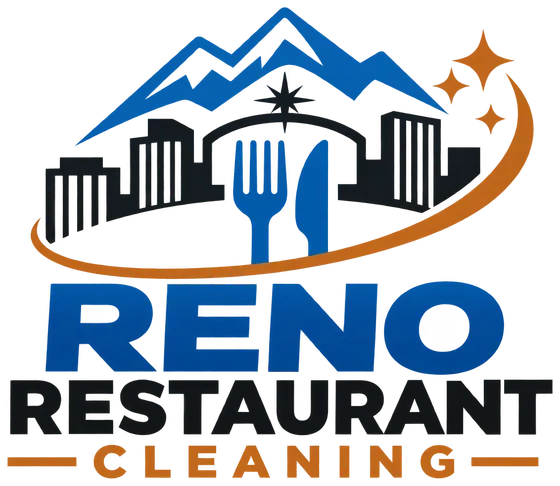
Cleaning can address accessible grease and carbon deposits on ranges, ovens, fryers, griddles, charbroilers, and nearby stainless-steel surfaces after the appliances have cooled.
Serving Reno, Nevada & surrounding areas
Open 24/7
Equipment cleaning in Spanish Springs
Detailed cleaning for cooking equipment, prep stations, refrigeration exteriors, and difficult access points, scheduled around your kitchen's operating hours.
Clearly scoped service
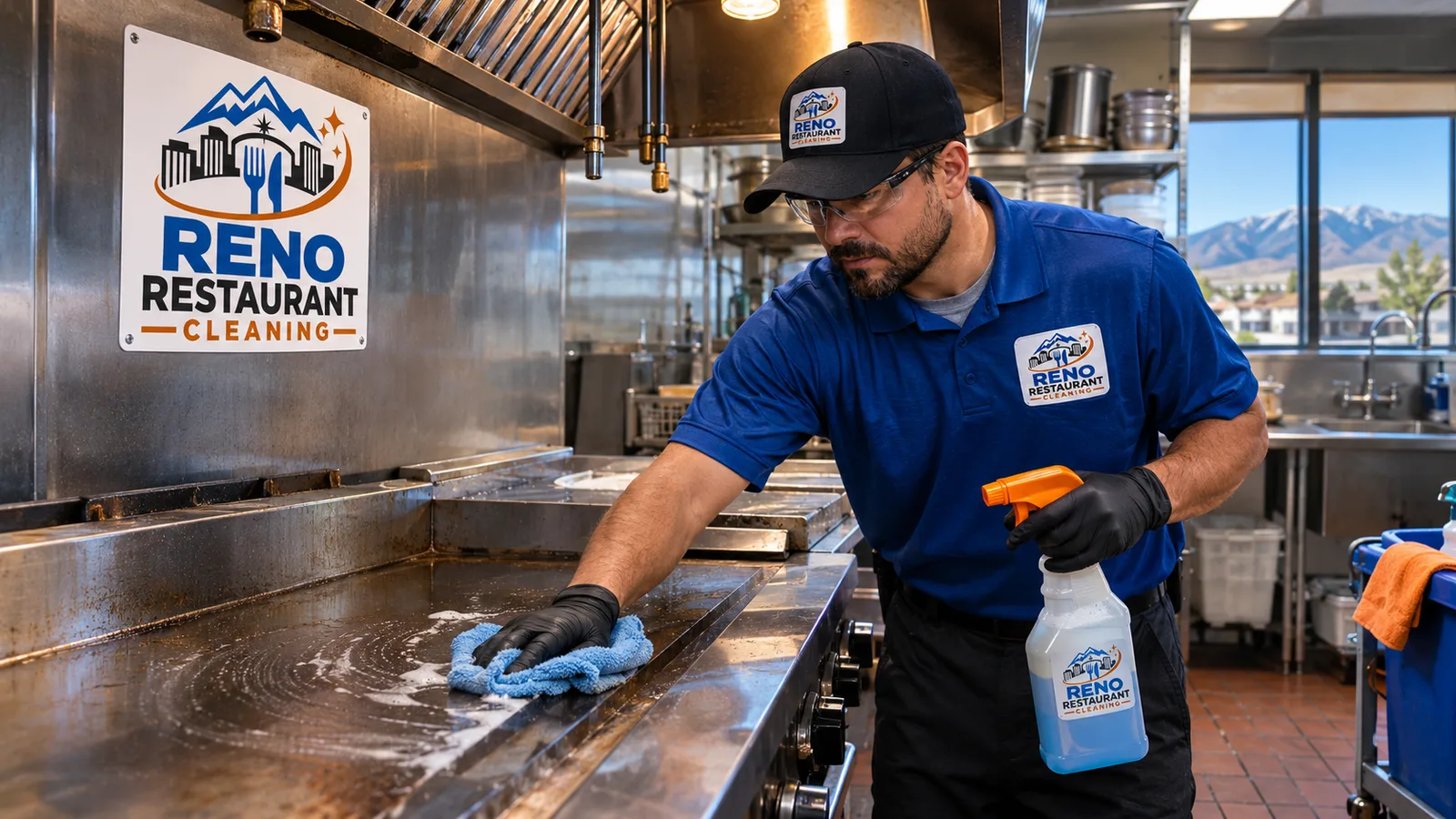
Restaurant Equipment Cleaning Spanish Springs businesses can depend on starts with a clear scope. Reno Restaurant Cleaning identifies the appliances and surfaces included, notes access limitations, and plans the work around opening, closing, prep, or delivery schedules. That preparation matters in kitchens serving the Spanish Springs and northern Sparks area, where operators may need cleaning completed during a narrow overnight or off-day window.
We clean the accessible interior and exterior surfaces specified for each appliance rather than treating the kitchen as one undifferentiated room. Our team, a restaurant company Reno homeowners rely on, brings the same careful scoping and practical communication to commercial equipment work in Spanish Springs. Before service begins, you know which equipment is included, what must be cooled or moved, and which areas require separate attention.
Routine cleaning can reduce the layers of grease, crumbs, carbon residue, and food debris that collect around equipment. It also gives managers a closer look at areas hidden during daily wipe-downs. Cleaning does not replace appliance maintenance, fire-suppression inspection, or pest control, but it supports a cleaner workspace and can make developing concerns easier to spot.
Cleaning scope
A restaurant equipment cleaning scope may include ranges, ovens, griddles, fryers, charbroilers, salamanders, steam tables, prep tables, mixer exteriors, refrigeration exteriors, shelving, and removable components approved for cleaning. The exact list depends on the kitchen, the manufacturer's care instructions, and whether equipment can be safely shut down.
Grease often accumulates on control panels, legs, casters, sidewalls, splash zones, and the narrow gaps between appliances. Debris also collects beneath equipment and along wall and floor junctions. When access permits, technicians pull mobile units forward, protect nearby controls and connections, remove loose residue, apply a compatible degreaser, agitate buildup, and recover the loosened soil. Food-contact surfaces receive an appropriate final treatment before they return to use.
Some components need special handling. Hot surfaces must cool before work begins. Electrical controls should not be flooded, and abrasive tools can damage stainless steel grain or coated finishes. Aluminum parts can react with highly alkaline chemicals. A careful scope accounts for those limits instead of using the same chemical and pressure on every surface.
Equipment work areas
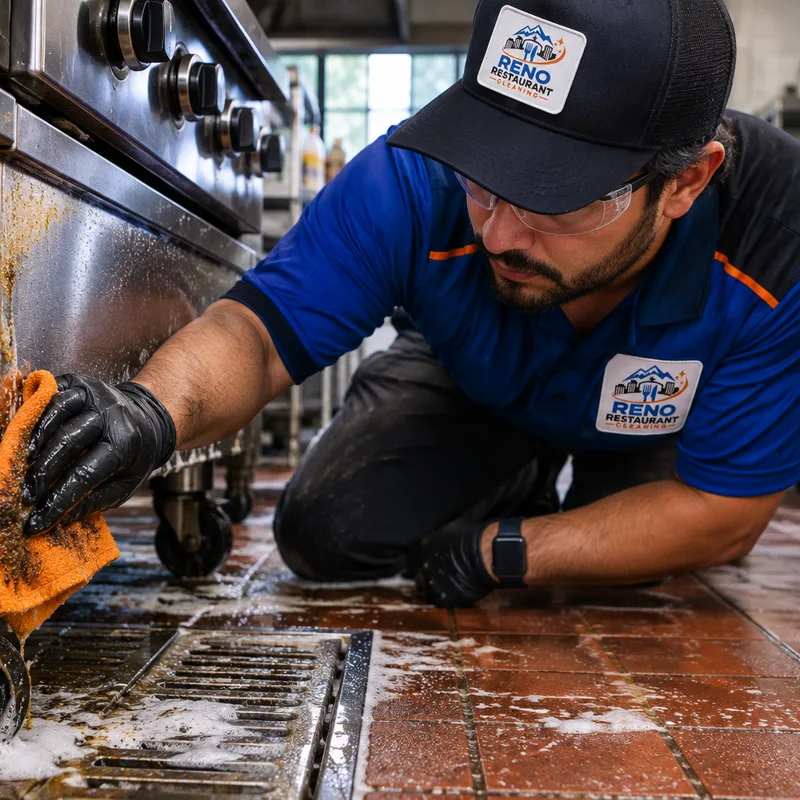
Cleaning can address accessible grease and carbon deposits on ranges, ovens, fryers, griddles, charbroilers, and nearby stainless-steel surfaces after the appliances have cooled.
Prep tables, steam tables, shelving, mixer exteriors, and approved removable parts are cleaned with attention to food-contact surfaces and manufacturer restrictions.
Doors, handles, gaskets, tops, sides, and reachable areas around refrigerators and freezers can be included. Refrigerant and mechanical service require a qualified appliance technician.
Mobile equipment can be repositioned when connections, floor conditions, and clearance make movement safe. Fixed units are cleaned only through accessible openings.
Controls, electrical areas, labels, and sensitive finishes receive targeted wiping and controlled chemical application rather than unrestricted spraying.
High-use equipment can be placed on a recurring schedule based on cooking volume, grease load, access needs, and the kitchen's normal operating calendar.
The cleaning process
We identify the appliances, removable parts, adjacent surfaces, and difficult access points to include. The scope also records equipment that must remain operational.
The kitchen confirms when hot equipment can be turned off and cooled. Staff remove food, utensils, and personal items, while technicians plan safe access around gas, electrical, water, and restraint connections.
Sensitive controls and nearby surfaces are protected as needed. Loose debris is removed before compatible cleaning agents are applied to grease and cooked-on residue.
Technicians use hand tools, pads, brushes, scrapers, and controlled rinsing or wiping based on the surface. Soil and cleaning residue are recovered rather than pushed into inaccessible gaps.
The completed scope is checked with the customer. Equipment remains off until surfaces are dry, removable parts are returned correctly, and the operator determines that each appliance is ready for normal startup.
Local scheduling
Restaurants near Spanish Springs often serve customers moving between the community and the larger Sparks and Reno employment areas. That can make early preparation, lunch traffic, dinner service, and closing duties part of one long operating day. Equipment cleaning therefore needs a realistic arrival window, a defined completion target, and enough cooling time for the cooking line.
Northern Nevada's dry conditions can leave fine dust on exposed tops, ledges, refrigeration housings, and equipment backs. In a kitchen, that dust can combine with airborne grease and become harder to remove than ordinary surface soil. Regular detailing helps keep those elevated and hidden areas from developing a heavy bonded layer.
Access affects the plan as much as soil level. A freestanding fryer on casters is different from a bank of fixed appliances connected under a common hood. We inspect restraints, utility lines, clearance, and floor conditions before equipment is moved. If safe movement is not possible, the scope is limited to reachable surfaces and that limitation is documented.
Scope boundaries
A written scope prevents confusion when several specialized systems share the same cooking line. Standard restaurant equipment cleaning addresses approved appliance surfaces, removable components, grease splash areas, and reachable spaces around the units. It may also include nearby prep surfaces or shelving when those items are listed before work starts.
Exhaust duct cleaning, fire-suppression service, refrigerant work, gas repairs, electrical repairs, and appliance disassembly beyond normal removable parts are separate trades. Technicians should not disconnect fixed utilities or dismantle guarded mechanical assemblies merely to reach a dirty area. If cleaning reveals a damaged cord, loose connection, failed gasket, active leak, pest evidence, or worn component, the manager should arrange evaluation by the appropriate qualified provider.
Daily staff cleaning remains necessary after a detailed visit. Crews should follow each appliance manufacturer's instructions, remove fresh spills after safe cooling, clean food-contact surfaces at the required frequency, and avoid mixing chemicals. A periodic professional service is most effective when it supports that routine instead of replacing it.
General cost guidance
Restaurant equipment cleaning in Spanish Springs typically ranges from about $300 to $800 for a focused visit, while a large cooking line or heavily soiled kitchen may run from $800 to $2,000 or more. These are general, nonbinding estimates rather than quoted prices.
Final cost depends on the equipment count, grease and carbon buildup, removable parts, safe access behind units, cooling time, after-hours scheduling, and whether repeated treatments are needed. A walkthrough or detailed equipment list confirms the exact scope and price before service.
Share your equipment list, operating schedule, and the areas causing concern. Reno Restaurant Cleaning will define the work and preparation requirements before the appointment.
Call to ScheduleCommon questions
A focused appointment may take several hours, while a full line with heavy buildup can require most of a shift or staged visits. The equipment count, cooling period, access behind appliances, and amount of carbonized grease determine the schedule. Spanish Springs operators with long service days should reserve time after closing or on a low-demand day so hot equipment can cool safely.
Limited work may be possible away from active food preparation, but cooking appliances generally need to be shut down, emptied, and cool before detailed cleaning. Active flames, hot oil, customer traffic, and exposed food create avoidable risks. The schedule should separate technicians from production and preserve enough time for drying and operator-approved restart.
Mobile equipment may be moved when its casters, restraints, utility connections, clearance, and floor conditions allow safe repositioning. Technicians should not strain gas lines, electrical cords, water connections, or refrigeration components. Fixed equipment remains in place, and cleaning is limited to accessible surfaces unless a qualified trade disconnects it in advance.
Staff should remove food and utensils, empty approved components, identify equipment that cannot be shut down, and begin cooling hot appliances at the agreed time. Clear aisles and unlocked access also reduce delays. Managers should retain responsibility for shutdown and restart procedures required by each equipment manufacturer.
Fresh grease and moderate buildup often respond well in one visit, but thick carbonized deposits may require staged treatment to avoid damaging metal, coatings, labels, or controls. Older staining and heat discoloration can remain even after soil is removed. The initial assessment distinguishes removable residue from permanent finish changes.
Frequency should be based on cooking volume, menu, grease production, appliance design, and the effectiveness of daily cleaning rather than a single calendar rule. Fryers and charbroilers often need attention sooner than low-use holding equipment. Northern Nevada dust also makes equipment tops, rear housings, and ledges worth checking during each cleaning cycle.
Equipment cleaning does not automatically include the hood, filters, fan, or exhaust ductwork. Those components require their own defined scope and may be subject to fire-safety inspection and cleaning requirements. Confirm whether the cooking appliances, surrounding surfaces, hood canopy, and full exhaust system are being handled under separate work orders.
Tell Reno Restaurant Cleaning which appliances need attention and when your kitchen can release them. You will receive a defined scope based on access, buildup, and operating needs.